How Much Will My Garden Cost?
Landscape Architect & Garden Designer MLA
How much does it really cost to transform a London garden? From access and groundwork to materials, planting, lighting and design, we look at where the investment goes — with real project costs from completed K Studio gardens.
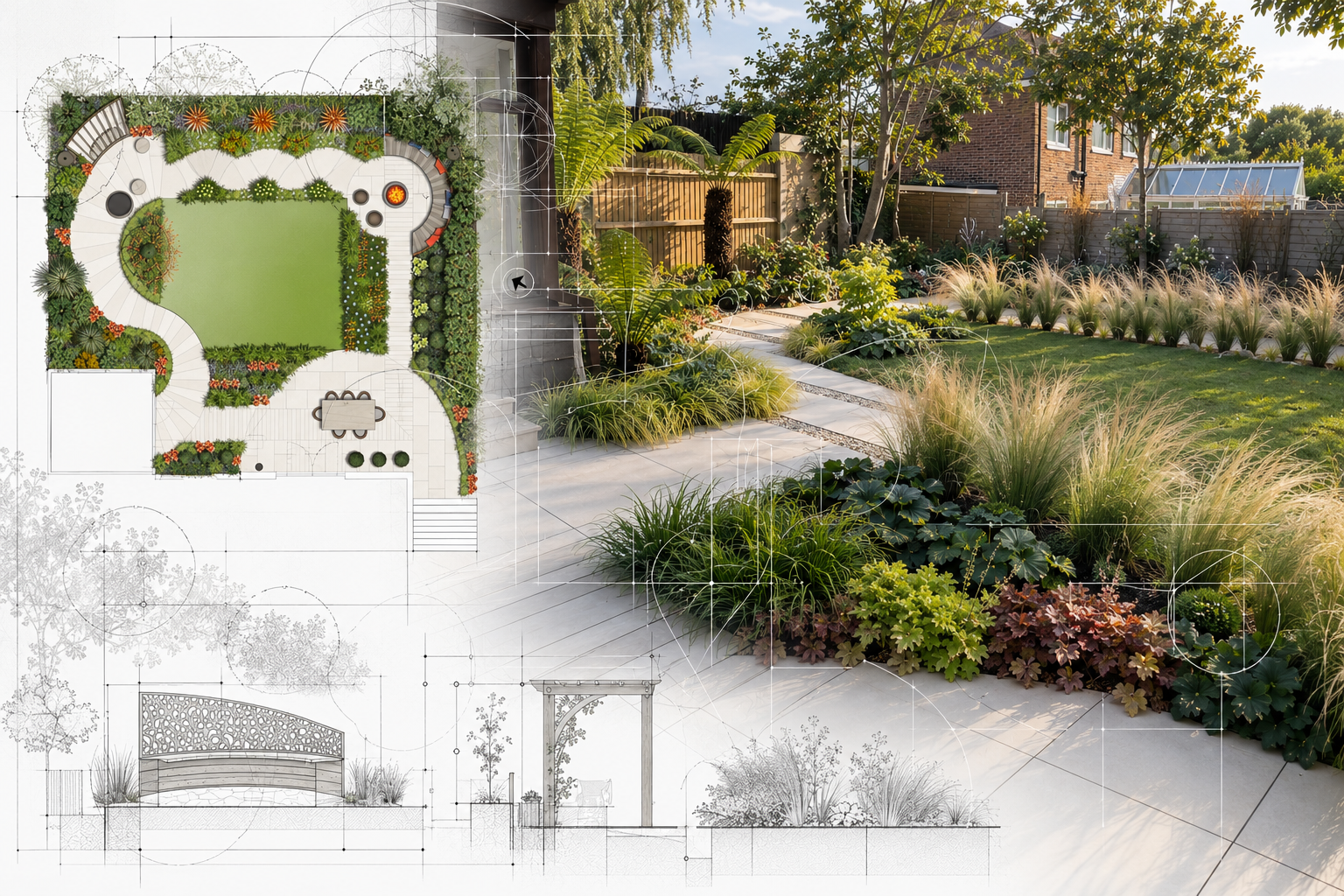
Understanding the Investment Behind a Beautiful Outdoor Space
Imagine looking through your window and feeling drawn outside.
Perhaps it's the movement of grasses in the breeze, the changing colours of the seasons, birdsong from the trees or simply the promise of a few quiet moments surrounded by nature.
The most loved gardens often have this quality. They make it easier to step outside, linger a little longer and notice the seasons changing around us.
A well-designed garden is far more than an outdoor space. It can become a place for gathering with family and friends, somewhere to catch your breath at the end of a long day, a place for children to play and explore, or simply somewhere that feels beautiful to look out onto throughout the year.
One of the things we hear time and again after a project is completed is that people spend far more time in their gardens than they ever expected. Morning coffee moves outdoors. Family meals drift onto the patio. Spaces that were once rarely used become part of everyday life.
Those changes rarely happen by accident. They are the result of thoughtful planning, good design and, inevitably, investment.
Which brings us to one of the first questions most homeowners ask when they begin considering a garden transformation:
"How much will it cost?"
It's a fair question, and an important one.
Interestingly, the conversations at the beginning of a project are rarely about paving, plants or even budgets.
More often, they're about what isn't working.
A garden that's difficult to use.
A view that feels uninspiring.
A family that has outgrown the space.
A patio that's too small for entertaining.
A forgotten corner that could become something special.
Those early conversations often have a greater influence on the budget than the size of the garden itself. A modest garden with ambitious requirements can cost considerably more than a larger space with simpler needs.
Every garden comes with its own opportunities and constraints. Every household has different priorities. Some people dream of entertaining friends late into summer evenings. Others want a peaceful retreat, a productive kitchen garden or a space where children can enjoy being outdoors.
For that reason, there is no single answer to the question of cost.
What we can do, however, is help you understand the key factors that influence both design and construction costs, where your investment goes and how thoughtful planning can help you make informed decisions from the outset.
More importantly, we hope this article helps you think about your garden not simply as a project cost, but as an investment in creating a place that encourages more time outdoors, strengthens your connection to nature and supports the people who use it for many years to come.
Why Design Comes First
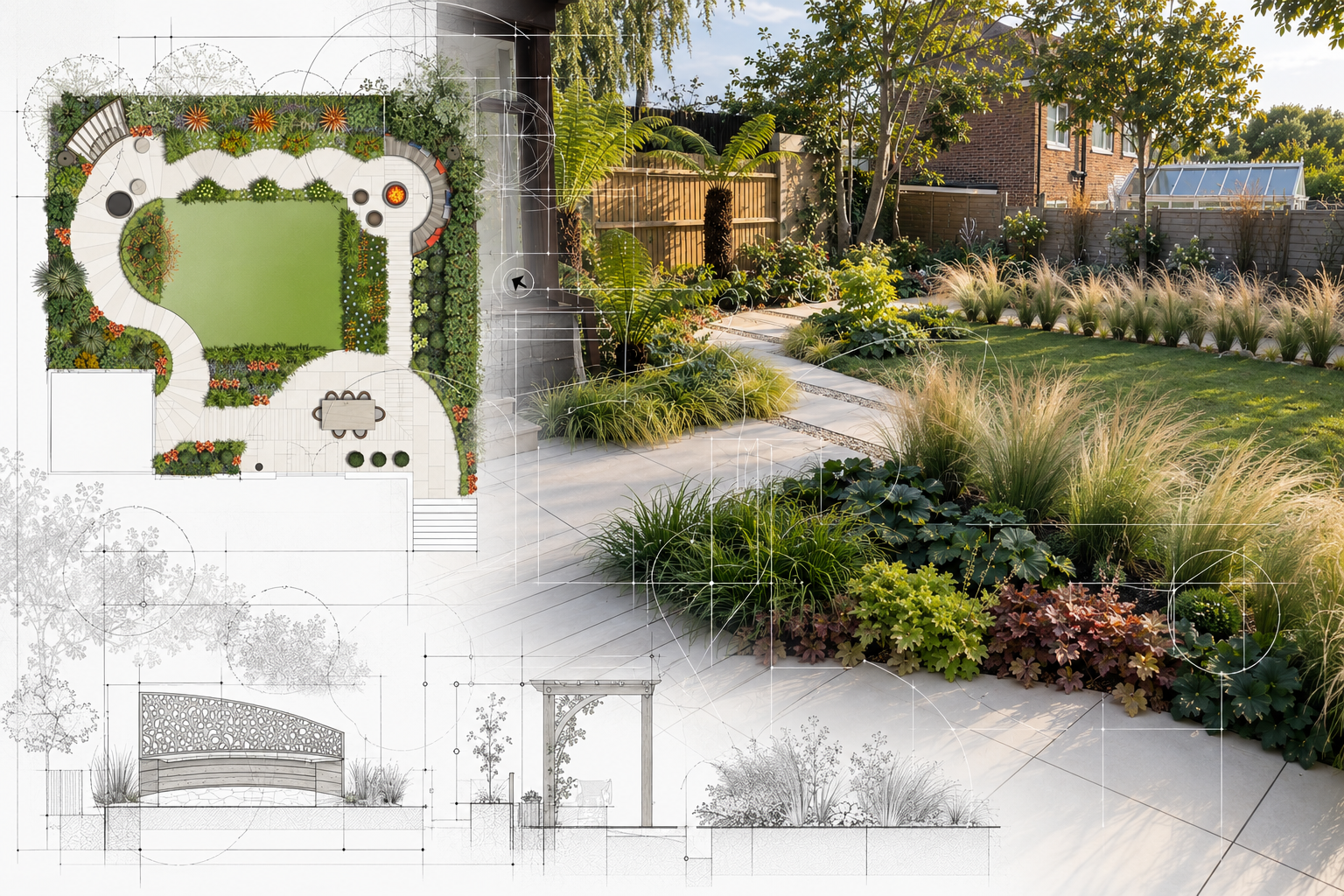
Explore our garden design services
Before we look at the factors that influence construction costs, it's worth spending a moment on design, because many of the decisions that shape the final budget are made long before any work takes place on site.
When people think about garden design, they often imagine deciding where the patio goes, where the lawn sits and where a few flower beds might be placed.
In reality, good garden design is about understanding how a space will be used, solving problems and making informed decisions that shape the future garden.
One example we encounter regularly is when homeowners have recently completed a house extension.
As part of the project, they are often offered a new patio by the building contractor. More often than not, this results in a large rectangular paved area stretching across the width of the house or from one boundary to the other.
At first glance, this might seem perfectly sensible.
But how much patio does the household actually need? Will six people regularly dine outdoors or only two? Is there enough room left for planting? Does the space feel inviting or simply exposed? Is there a reason for the shape and size, or has it simply followed the footprint of the house?
These are design questions, not construction questions.
The answers can have a significant impact not only on how the garden looks, but on how it functions and how the budget is ultimately spent.
Planting is another good example.
Many people have bought plants they loved at a garden centre, only to find that a year later some are thriving, others are struggling and a few have disappeared altogether.
Often the issue isn't the plant itself. It's that it was placed in the wrong conditions: too much shade, too much sun, soil that doesn't suit its needs or simply not enough space to grow and mature properly.
Good planting design isn't simply about choosing beautiful plants. It's about understanding how they will perform, how they will work together and how the garden will evolve over time.
In many ways, design is about understanding how people want to use their garden and finding the most effective way of making that happen.
It provides an opportunity to explore different ideas, compare options and solve challenges while they are still lines on paper rather than costly changes on site.
Design is also the stage where many of the most important financial decisions are made.
Materials are compared. Different approaches are evaluated. Planting budgets are tested. The balance between immediate impact and long-term growth is considered. Opportunities to simplify, phase or prioritise different elements of the project can all be explored before any commitments are made.
The design process therefore provides the first realistic understanding of what a project is likely to cost and whether the desired outcome aligns with the available budget.
This is one of the reasons the value of professional garden design is often underestimated. A design is not simply an idea sketch showing where a patio, lawn or planting bed might sit. It is a process of analysis, decision-making and refinement that gradually transforms a concept into a practical and buildable project.
As the design develops, every element is considered in greater detail. Materials are selected, levels are resolved, planting is planned and technical requirements become clearer. By the end of the process, both the client and contractor should have a clear understanding of what is being proposed, how it is intended to be delivered and the level of investment likely to be required.
At K Studio, our designs are developed in considerable detail. We aim to resolve and specify each element as precisely as possible so that contractors have clear information to work from and clients understand exactly what is being priced. Materials, levels, construction details, quantities, planting and relevant technical specifications are considered as part of a coordinated whole rather than a collection of separate decisions.
The more information that is resolved and the more potential problems that are addressed during the design stage, the greater the confidence in the final budget. Clear information allows contractors to price the work more accurately, reduces assumptions and helps limit the risk of costly changes later.
Professional design is itself an investment, and design fees will vary according to the size and complexity of the garden, the scope of the project and the level of detail required. When comparing design fees, it is therefore important to understand exactly what is included. A concept sketch and a comprehensive design package developed to guide construction are fundamentally different services.
Ultimately, good design is not simply about creating a beautiful garden. It is about making informed decisions, understanding costs and creating a clear roadmap for turning an idea into a successful, well-built space.
Understanding Landscaping & Construction Costs
Once the design has been developed, attention turns to the construction phase.
This is where ideas begin to take shape and where the majority of the investment is typically made.
One of the reasons garden costs can vary so dramatically is that no two sites are ever quite the same. Two gardens of a similar size may require very different levels of labour, materials and preparation work.
Many of the factors that influence cost are not immediately visible when looking at a finished garden. While materials, planting and features often attract the most attention, elements such as access, ground conditions, drainage requirements and levels can have an equally significant impact on the overall budget.
Understanding these factors can help explain why garden costs vary and, more importantly, where the investment is actually going.
Learn about our landscaping services
Size Matters (But Not In The Way You Think)
It is easy to assume that larger gardens automatically cost more than smaller ones.
While size certainly plays a role, complexity often has a much greater influence on the final budget.
A large open lawn with a simple patio may be relatively straightforward to construct.
A compact urban garden can be far more demanding, not only because it may need to accommodate several functions within a limited footprint, but because the level of detail is much more visible.
In smaller gardens, people experience the space from many different angles and distances: from inside the house, from an upstairs window, from a seating area, while moving through the garden or while standing right beside the planting.
This means the proportions, material choices, planting structure, edges and junctions all need to be carefully considered. The garden needs to feel balanced and cohesive from every viewpoint.
As a result, complexity and attention to detail often have a greater influence on cost than size alone.
A family garden that needs to accommodate entertaining, play, storage, planting and year-round interest can require more careful planning and construction than a larger garden with fewer demands.
This is why comparing gardens purely on square metreage can be misleading. Two gardens of the same size can have vastly different budgets depending on what they are being asked to do and the level of detail required to achieve it.
People rarely talk about the square metreage of a garden once it is finished. What they remember is how it feels to spend time there. Creating that feeling often has far more to do with thoughtful design, careful detailing and quality craftsmanship than size alone.
Access: An Important Factor Often Overlooked
When people imagine a garden project, they naturally focus on the finished result: the paving, planting, lighting or seating areas. What is often overlooked is how everything moves in and out of the garden throughout the construction process.
Before a new garden can be built, the existing one often needs to be cleared. Old paving, concrete, soil, vegetation and construction waste all need to be removed from site. Once that work is complete, the process begins again in reverse as new materials, plants and equipment are brought back in.
A project with wide side access may allow machinery, materials and waste to move efficiently in and out of the garden.
In contrast, a garden that can only be reached through a narrow passage or through the house may require every paving slab, wheelbarrow of soil, bag of aggregate, plant and piece of waste material to be moved by hand.
The difference can be significant.
Access doesn't only affect labour costs. It can also influence the construction methods used, the type of materials that are practical to work with and the amount of time required on site.
Where machinery cannot reach the garden and materials need to be carried through a house or narrow side passage, deliveries may need to be made in smaller quantities. Bulk materials, which are typically more economical, are not always practical, meaning smaller packaged alternatives can sometimes be required at a higher cost.
The same principle applies to waste removal. Soil, concrete, old paving and garden debris all need to leave the site the same way new materials arrive. What might be a relatively straightforward operation with good access can become considerably more labour intensive when everything has to be moved by hand.
In densely built urban areas, additional logistical challenges can arise. Limited front garden space, restricted parking or the inability to position a skip close to the property may require waste to be removed in stages and collections carefully coordinated throughout the project.
While these practical considerations are invisible in the finished garden, they can have a significant influence on construction time, labour requirements and ultimately the overall budget.
Understanding these constraints early helps ensure that expectations, construction methods and budgets are aligned from the outset.
Ground Conditions, Levels & Drainage
Some of the most important factors influencing the cost of a garden are the ones you may never see once the project is complete.
Beneath every patio, lawn, planting bed or pathway lies the groundwork that supports it.
A garden that appears relatively straightforward on the surface can sometimes reveal unexpected challenges once work gets underway. Existing concrete foundations, buried rubble, compacted soil, drainage issues or significant level changes can all influence the amount of preparation required.
In London and much of the South East, heavy clay soil is one of the most common conditions we encounter. Clay can be an excellent growing medium when managed correctly, but it also presents challenges. It drains slowly, becomes waterlogged during wetter months and can become extremely hard during prolonged dry periods.
It is also surprisingly common to uncover remnants of previous building works. Buried concrete, old foundations, brick rubble and compacted builders' spoil often remain beneath the surface long after previous projects have been completed.
While these conditions are not necessarily problematic, they frequently require additional preparation before new landscaping can be installed successfully.
Level changes are another good example.
A sloping garden is not necessarily a disadvantage. In fact, some of the most interesting gardens make use of changes in level to create distinct spaces, improve views and introduce a greater sense of journey through the landscape.
However, creating practical and usable spaces on a slope often requires additional excavation, retaining structures, steps, drainage solutions and careful construction. Naturally, these elements increase both the complexity and cost of a project.
Drainage is another area that is rarely noticed when it works well, but quickly becomes apparent when it doesn't.
One of the most common concerns we hear from homeowners is that parts of the garden become unusable after heavy rain. Lawns remain waterlogged, patios hold standing water or planting areas struggle because excess moisture has nowhere to go.
Addressing these issues often involves work that will never be visible once the garden is finished. Land drainage systems, permeable surfaces, careful grading and improvements to soil structure all help water move through the landscape more effectively.
Much like the foundations beneath a house, these elements rarely attract attention once the project is complete. Yet they play a crucial role in the long-term success of the garden.
A beautifully finished patio or carefully designed planting scheme can only perform as well as the groundwork beneath it.
For that reason, investing in proper preparation is rarely money wasted. More often, it creates the conditions needed for the garden to perform well, mature successfully and remain enjoyable for many years to come.
Materials & Planting

See our planting design services
Materials and planting are often the elements that give a garden its strongest sense of character. They influence how the space looks, how it feels to spend time in and, naturally, play a significant role in the overall budget.
Hard landscaping materials alone can vary considerably in cost. Porcelain paving, natural stone, clay pavers, timber, metalwork and bespoke elements all come with different price points, installation requirements and long-term maintenance considerations.
However, more expensive materials do not automatically create a better garden.
Some of the most successful spaces are built using relatively simple materials that have been thoughtfully selected and detailed well. Equally, premium materials can quickly lose their impact if they are not appropriate for the setting or are competing with too many other features.
The choice of material itself is only part of the equation. Installation methods, detailing and the complexity of the design can often have just as much influence on cost as the material selected.
Planting is often one of the biggest surprises for homeowners.
Many people underestimate how much a comprehensive planting scheme can cost. Individually, plants may not seem particularly expensive, but when you begin combining trees, shrubs, evergreen structure, seasonal perennials, grasses, bulbs and groundcover across an entire garden, the investment can quickly become substantial.
At the same time, planting is one of the elements that has the greatest influence on how a garden feels. It brings softness, movement, seasonal change and a sense of maturity that develops over time.
The size and maturity of plants can also have a significant impact on cost. Larger and more established plants command higher prices, particularly slower-growing species that may have taken many years to reach a desirable size.
One of the key decisions within a planting scheme is determining where mature plants will have the greatest impact and where patience can deliver a similar result. Some plants justify the additional investment because they provide immediate structure, screening or presence, while others establish quickly and can achieve a similar effect within a relatively short period of time.
Finding the right balance between instant impact and long-term value is one of the ways thoughtful plant selection can help shape both the final result and the overall budget.
Lighting & Irrigation
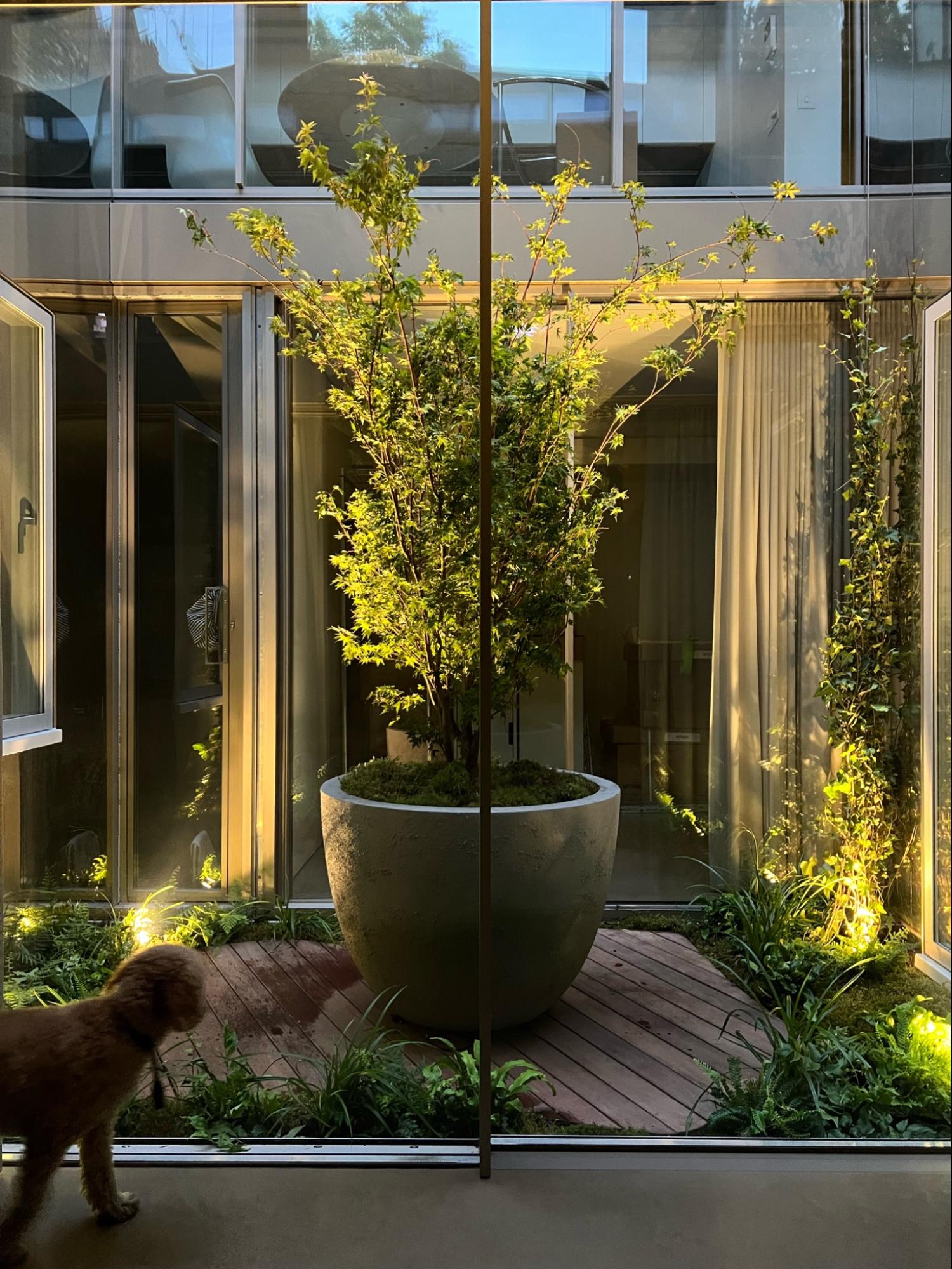
While materials and planting often receive the most attention, lighting and irrigation can have a significant influence on how a garden performs and is enjoyed over the long term.
Garden lighting is one of those features that is often underestimated during the planning stage but quickly appreciated once installed. A thoughtfully lit garden can extend the enjoyment of the space beyond daylight hours, improve safety and highlight key features that might otherwise disappear after sunset.
The quality of the lighting system itself is equally important.
Unlike indoor fittings, garden lighting is exposed to the elements throughout the year. Rain, frost, moisture, temperature fluctuations and general weathering place considerable demands on every component. As a result, there can be a significant difference between lower-cost fittings and products specifically designed for long-term outdoor use.
In our experience, investing in quality lighting from the outset is often worthwhile. Reliable fittings and components typically offer greater longevity, require less maintenance and help avoid the frustration and expense of frequent replacements further down the line.
Irrigation is another feature that has become increasingly relevant in recent years.
With weather patterns becoming less predictable and prolonged dry spells becoming more common during the summer months, many gardens are placed under increasing stress during periods of hot weather.
A good irrigation system helps ensure that trees, shrubs and planting receive consistent watering when they need it most, particularly during their establishment period when they are most vulnerable.
Compared with the overall cost of a landscaping project, irrigation is often a relatively modest investment. Yet it can provide significant convenience, reduce the risk of plant losses and help protect what is often a substantial investment in planting.
It is also far easier to install irrigation as part of the main landscaping works than once everything is finished. Pipework can be incorporated at the appropriate stage, avoiding unnecessary disruption and additional costs later on.
When considered alongside the overall investment in a garden, both lighting and irrigation often provide benefits that far outweigh their initial cost.
How To Make Your Budget Work Harder
By this stage, it is probably becoming clear why there is no simple answer to the question of how much a garden costs.
Every project comes with its own opportunities, constraints and priorities. However, regardless of budget, there are often ways to maximise value and focus investment where it will have the greatest impact.
One of the biggest advantages of a well-considered design is the ability to make informed decisions early. Understanding priorities from the outset makes it easier to identify where investment will have the greatest influence on how the garden looks, functions and evolves over time.
Not every garden needs to be completed in a single phase.
In many cases, it can make sense to focus on the foundations of the project first and allow other elements to be introduced over time. Ground preparation, drainage, levels, quality construction and key structural planting provide the framework that everything else relies upon.
It is generally far easier to add planting, decorative features or furniture in the future than it is to revisit drainage issues, replace failing construction work or rebuild areas that were not properly prepared in the first place.
Experience also plays an important role in identifying where investment will genuinely improve the final result and where it may offer limited additional value. Not every feature needs to be installed on day one, not every material needs to be the most expensive option and not every plant needs to be purchased at full maturity.
In practice, a client may begin with a wish list that includes a generous entertaining terrace, mature planting, bespoke storage, lighting, irrigation and perhaps an outdoor kitchen. If the available budget cannot comfortably accommodate everything, this doesn't necessarily mean compromising the overall design. It means establishing where the investment will make the greatest difference.
We might retain the generous terrace but simplify the material palette, invest in mature planting where immediate screening or structure is important, use younger plants in areas that will establish quickly and allow certain features to be introduced at a later stage.
The important point is that the garden is still considered as a complete composition. Decisions are made in the context of the overall design rather than simply removing individual elements until the numbers fit.
Often, the most effective use of a budget comes from understanding which elements will have the greatest influence on how the garden is used, experienced and enjoyed.
The goal is not necessarily to spend less, but to ensure that every pound invested is working as hard as possible.
So, How Much Does a Garden Actually Cost?
By now, it is probably clear why there is no single answer to the question of how much a garden costs.
Size is only one part of the picture. Materials, structures, lighting, irrigation, planting, access constraints, ground conditions and the overall level of specification all influence the final budget.
Industry figures are sometimes expressed as a cost per square metre. While this can be a useful starting point, it should always be treated with caution.
As a broad 2026 guide, professionally designed and landscaped gardens in London can often fall within a range of approximately £300–£600+ per square metre including VAT. Smaller gardens, complex sites and projects with a high level of specification can exceed this range considerably.
The lower end of this range is more commonly achievable in larger gardens where economies of scale can be created through larger lawn areas, simpler layouts, bulk material deliveries, straightforward access and fewer bespoke elements.
Many small to medium-sized London gardens are more likely to sit towards the upper end of the range. Restricted access, site constraints, extensive planting, detailed construction and the concentration of features within a relatively compact space can all have a significant influence on the final cost per square metre.
However, these figures should be viewed as a broad guide rather than a rule. A simple garden with straightforward access and a modest specification will sit at a very different point in that range from a garden incorporating level changes, bespoke structures, premium materials, lighting, irrigation and mature planting.
Rather than providing an exact cost, a broad cost-per-square-metre guide can serve as a useful checkpoint when considering the affordability of a project. It can help establish whether expectations and budget are broadly aligned and provide an early indication of the level of specification that may be achievable within a particular investment range.
For that reason, we generally find it more helpful to think about budgets in terms of what the garden is being asked to achieve rather than size alone.
It is also worth remembering that not all gardens are built to the same standard.
Many homeowners will have seen paving, decking, fencing or planters available through DIY retailers and naturally compare those prices with the cost of a professionally designed and constructed garden. While understandable, the comparison is often not a like-for-like one.
The cost of a garden extends far beyond the visible materials. Ground preparation, drainage, waste removal, foundations, skilled labour, detailing, planting, lighting, irrigation and installation all contribute to the final result.
Material quality also plays a significant role. Products manufactured to meet a low price point may perform perfectly well for a few years, whereas higher-quality materials are often chosen for their durability, appearance and ability to withstand decades of use and exposure to the elements.
A professionally designed and constructed garden should not be viewed simply as a collection of individual products. It is a carefully considered outdoor space where every element works together, from what lies beneath the surface to the finishes that are ultimately seen and enjoyed.
For this reason, comparing the cost of a complete garden to the price of individual materials alone can give a misleading impression of the true investment involved.
The examples below provide a more realistic picture of how different budgets translate into real gardens and real projects.
Real Garden Cost Examples
Example 1: Courtyard Garden, West Dulwich
Year Completed
2023
Garden Size
Approximately 50m²
Construction Cost
Approximately £40,200 including VAT
What Was Included
- Extensive site clearance and waste removal, including the existing stone patio and overgrown planting
- Premium porcelain paving
- Clay pavers laid in a herringbone pattern
- Hardwood wheelchair access ramp
- Reclaimed brick raised planting beds
- Irrigation system
- High-specification garden lighting
- Bespoke vertical garden, approximately 2.4m × 1.4m
- Stainless steel wire support system for climbing plants
- Bespoke garden mirror
- Self-contained water feature
- Extensive planting scheme
- Soil replacement
Why This Budget?
This project demonstrates particularly well why garden size alone rarely determines cost.
Access to the garden was restricted, with all materials, waste and equipment transported through the garage and house, significantly increasing labour requirements throughout the build.
The existing garden required extensive clearance and soil replacement. Material choices also contributed to the overall investment, including premium paving, reclaimed brickwork and a number of bespoke features.
The compact footprint required a high level of detailing, while the mature planting, lighting and specialist installations further increased the overall specification.
This project was completed in 2023. Construction costs have increased since then and an equivalent project delivered today would likely require a higher budget.
View the West Dulwich courtyard garden project
Example 2: Contemporary Family Garden, Streatham
Year Completed
2023
Garden Size
Approximately 220m²
Construction Cost
Approximately £90,000 including VAT
What Was Included
- Extensive site clearance and excavation works
- Significant level adjustments across the garden
- Large porcelain entertaining terrace
- Raised planting beds
- Generous lawn
- Irrigation system
- Privacy screening and matching gate
- Bespoke hardwood daybed beneath the existing tree
- Stainless steel climber support systems
- Extensive soil improvement and ground preparation works
- Comprehensive planting scheme
- Mixed gravel, paving and groundcover planting paths
Why This Budget?
The primary cost driver on this project was the relationship between the house and the garden.
The house sat considerably higher than the main garden, requiring the creation of two connected levels and substantial groundwork before the finished garden could take shape.
A significant amount of excavation, imported materials and construction work was required to create practical and comfortable spaces for everyday use. While access was relatively straightforward, the scale of the garden, extensive hard landscaping and generous planting areas naturally contributed to both material and labour costs.
This project was completed in 2023. Construction costs have increased since then and an equivalent project delivered today would likely require a higher budget.
View the Streatham family garden project
Example 3: Family Garden Transformation
Year Completed
2024
Garden Size
Approximately 90m²
Construction Cost
Approximately £33,600 including VAT
What Was Included
- Minimal site clearance and waste removal
- Hardwood decking area and steps connecting the house to the garden
- Small porcelain pathway
- Generous lawn
- Budget-conscious garden shed
- Flower beds along the garden boundaries
- Three semi-mature screening trees
- Shrubs, ornamental grasses and perennial planting
- Minor level adjustments and ground preparation works
Why This Budget?
This project demonstrates how thoughtful design and clear priorities can deliver a successful garden without extensive construction works or premium features throughout.
Access was straightforward, allowing efficient deliveries and waste removal, while level adjustments were relatively modest.
Existing mature trees already provided structure and character, reducing the need for additional large specimen planting. A simple material palette, practical layout and low-maintenance planting scheme helped create an attractive and functional family garden while keeping costs under control.
Is A Garden Worth The Investment?
After discussing design fees, construction costs, materials, planting and budgets, it is reasonable to ask one final question: is it worth it?
From a financial perspective, a thoughtfully designed and well-maintained garden can contribute positively to both the appeal and value of a property. In many parts of the UK, particularly in urban areas where outdoor space is at a premium, a functional and attractive garden is increasingly seen as an extension of the home rather than a separate space.
The exact impact on property value will always depend on factors such as location, property type and the quality of the garden itself. However, a well-designed outdoor space can make a property more desirable, more marketable and ultimately more enjoyable to live in.
Yet the value of a garden is rarely measured by financial return alone.
Over the years, one of the most consistent pieces of feedback we receive from clients is how much more they use their garden after the transformation is complete. Areas that were previously overlooked become part of everyday life. Morning coffee moves outdoors, family meals are shared on the patio and spaces that once felt disconnected from the house become natural extensions of the way people live.
Perhaps even more rewarding is what happens in the years that follow.
Planting matures, trees establish, seasonal interest develops and the garden gradually grows into itself. Within just a few growing seasons, the character of a well-designed planting scheme can change considerably. Many clients who once described themselves as "not gardeners" develop a genuine interest in caring for the space and watching it evolve over time.
Unlike many other home improvements, a garden is not necessarily at its best on the day construction finishes. In many ways, that is only the beginning.
A well-designed garden continues to develop, soften and improve with age. It becomes more established, more connected to its surroundings and more deeply woven into everyday life.
For some homeowners, the return on investment may ultimately be reflected in the future value of their property. For others, it will be measured in time spent outdoors, memories made with family and friends, and the simple pleasure of looking out of the window and seeing a space that feels alive, settled and truly part of their home.
Perhaps the real value of a garden lies somewhere between the two.
Considering Transforming Your Garden?
Every project begins with understanding the space, what you want from it and what level of investment is realistic. Explore our garden design services, view recent projects, or contact K Studio to discuss your garden.

Envision
Design
Enjoy
Start your green journey with a click