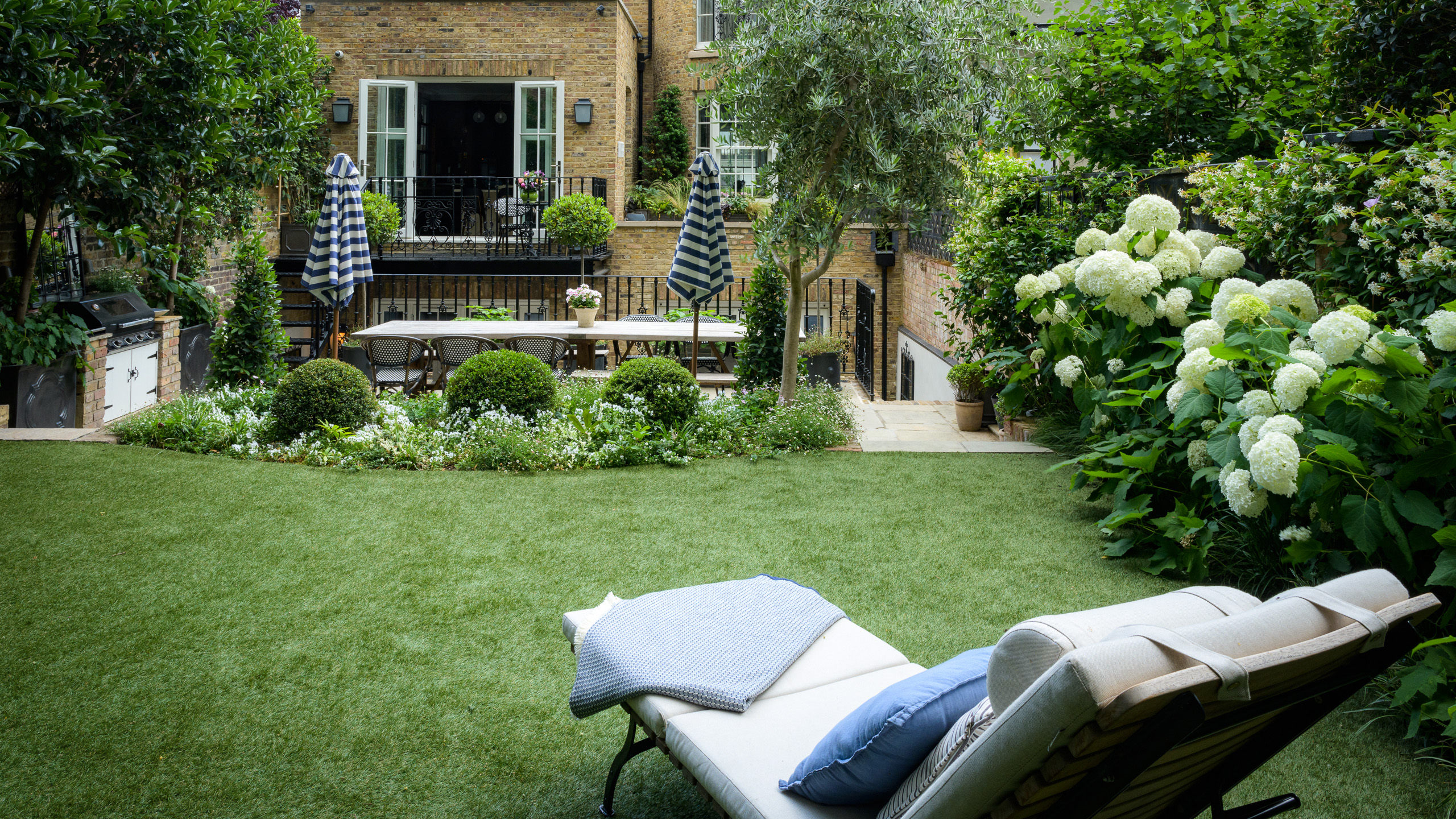
What does luxury really mean in a London garden?
In a city as densely built as London, having a garden is a privilege. Having one where you can truly relax, without feeling overlooked or constantly reminded of the surrounding city, is something else entirely. When we think of luxury gardens, our minds often turn to beautiful materials, generous terraces, outdoor kitchens and carefully designed features. Yet, in our experience, one of the most valuable qualities a garden can offer is far less tangible: a sense of privacy, peace and separation from the busy world beyond its boundaries. Achieving this is not always straightforward. London gardens exist within a complex relationship of neighbouring buildings, upper-floor windows, changing ground levels and often limited space. What works beautifully in one garden may be entirely unsuitable for another. Creating privacy is therefore about much more than installing tall fences or planting a row of evergreen trees. It requires an understanding of the surrounding architecture, the views we want to preserve or conceal, and how the garden's layout and planting can work together to create a sense of retreat. A well-designed garden doesn't necessarily need to shut out its surroundings completely. Sometimes the most successful approach is to frame a beautiful distant view; at other times, it is to create a more intimate, enclosed space where the city seems to fade into the background. Ultimately, the real luxury is having an outdoor space where you feel comfortable, at ease and free to enjoy your garden on your own terms.
Chapter 01 — Privacy Is About More Than Being Hidden
Privacy in garden design is often associated with screening — taller fences, evergreen hedges or trees positioned to block neighbouring windows. While these elements certainly have their place, creating a genuinely private garden begins much earlier, with understanding the site and its relationship to everything around it. A garden does not exist in isolation. Neighbouring buildings, overlooking windows, changes in ground levels, existing trees and views beyond the boundaries all influence how the space can be organised. Some of these conditions cannot be changed, but they can inform the design in ways that are not immediately obvious. This is why the most successful arrangement is not necessarily the one a homeowner initially imagines. A seating area might work better in an unexpected corner, or a particular view might be worth preserving rather than screening. Part of the design process is exploring these possibilities, presenting different approaches and helping clients understand how each could change their experience of the garden. Privacy also needs to be balanced with proportion and openness. Introducing tall screening uniformly around a small garden can make it feel unnecessarily enclosed. Instead, we consider where height is genuinely needed and how planting, structures and changes in enclosure can be introduced gradually, creating privacy without overwhelming the space. There is another dimension to this approach: the way a garden reveals itself. We see a garden as a journey, although every garden has its own distinctive rhythm. Some spaces benefit from openness and uninterrupted views; others lend themselves to a more meandering arrangement, where planting and carefully positioned elements gradually reveal different areas. A focal point might draw the eye from the house, while another part of the garden remains partially concealed until you move further into the space. Even a change in viewing angle can reveal a different composition.
The intention is not to hide everything, but to create a landscape that feels considered, balanced and quietly intriguing — one that offers privacy while still leaving something to discover.
Chapter 02 — Designing Privacy Into the Layout
Once the wider context of a garden is understood, the next challenge is translating those observations into a layout that balances privacy with the way people want to use the space. Different parts of a garden may require different degrees of enclosure, but there is no universal rule that dining areas should be open or relaxation spaces should be secluded. The right arrangement emerges from the site's conditions, the client's preferences and the careful consideration of scale and proportion. One of the most effective approaches is to think strategically about where screening is positioned, rather than simply how tall it needs to be. For example, a relatively modest tree or overhead structure placed close to a seating area may interrupt views from neighbouring upper-floor windows more effectively than a much taller screen along the boundary. This can provide privacy precisely where it is needed while preserving a greater sense of openness elsewhere. Sunlight introduces another important consideration. In London gardens, where surrounding buildings already influence sun exposure, additional screening needs to be carefully assessed against the movement of the sun throughout the day. Sometimes an area that is naturally shaded and heavily overlooked presents an opportunity rather than a problem. With thoughtful design, it could become a comfortable, secluded retreat — particularly welcome during warmer summer days.
At the same time, we should not underestimate the value of sunshine in a British garden. After months of short days and grey skies, having somewhere to enjoy the sun can be just as important as privacy itself. These priorities do not always align perfectly. There may be situations where increasing privacy means sacrificing some sunlight, and the most appropriate solution depends on what matters most to the people using the garden. Exploring alternative arrangements allows clients to understand those trade- offs and make informed decisions. Changes in ground level can also offer valuable opportunities. Where site conditions allow, a slightly lowered seating area, carefully integrated retaining walls or a sunken terrace can introduce a greater sense of enclosure without relying exclusively on tall boundaries or dense planting. Such interventions can also bring another dimension to the design, creating changes in perspective, spatial depth and a more dynamic relationship between different parts of the garden. However, they must be considered alongside drainage, accessibility, construction complexity and the existing topography. Ultimately, the individual elements need to work together as one coherent landscape. Privacy, sunlight, levels, circulation and planting are not separate design exercises. They influence one another, and the quality of the final arrangement lies in finding the right balance between them. There is technical reasoning behind these decisions, but also something less easily measured: the designer's understanding of proportion, spatial relationships and how a garden should feel as a whole.
Chapter 03 — Planting as a Living Form of Screening
Planting is one of the most versatile ways to introduce privacy into a garden. Unlike a fence or solid wall, it can filter views, soften surrounding architecture and create a sense of enclosure while bringing movement, texture and seasonal character into the space.
But effective screening planting should never feel like an afterthought — a collection of trees or shrubs introduced simply to conceal an unwanted view. It needs to belong to the wider landscape composition, responding to the architecture, spatial arrangement and overall character of the garden. This does not necessarily mean creating a lush, naturalistic environment. In some gardens, a restrained architectural arrangement of clipped hedges or carefully positioned trees may be entirely appropriate. In others, a softer, layered composition might feel more at home. Neither approach is inherently better. The beauty lies in how naturally the planting belongs to its surroundings. Screening With Depth, Texture and Character Privacy planting does not need to be monotonous. A continuous evergreen hedge may provide effective screening, but there are often opportunities to introduce greater visual interest through variations in height, form, foliage and density. A combination of trees with lighter canopies, shrubs and lower planting can filter views at different levels while creating depth within the garden. Elsewhere, a more structured composition might use repeated forms, contrasting textures or carefully controlled proportions to achieve a quieter, architectural effect. The choice depends on the site, the design direction and the client's preferences. What matters is that screening becomes part of the garden's visual identity rather than an isolated functional addition.
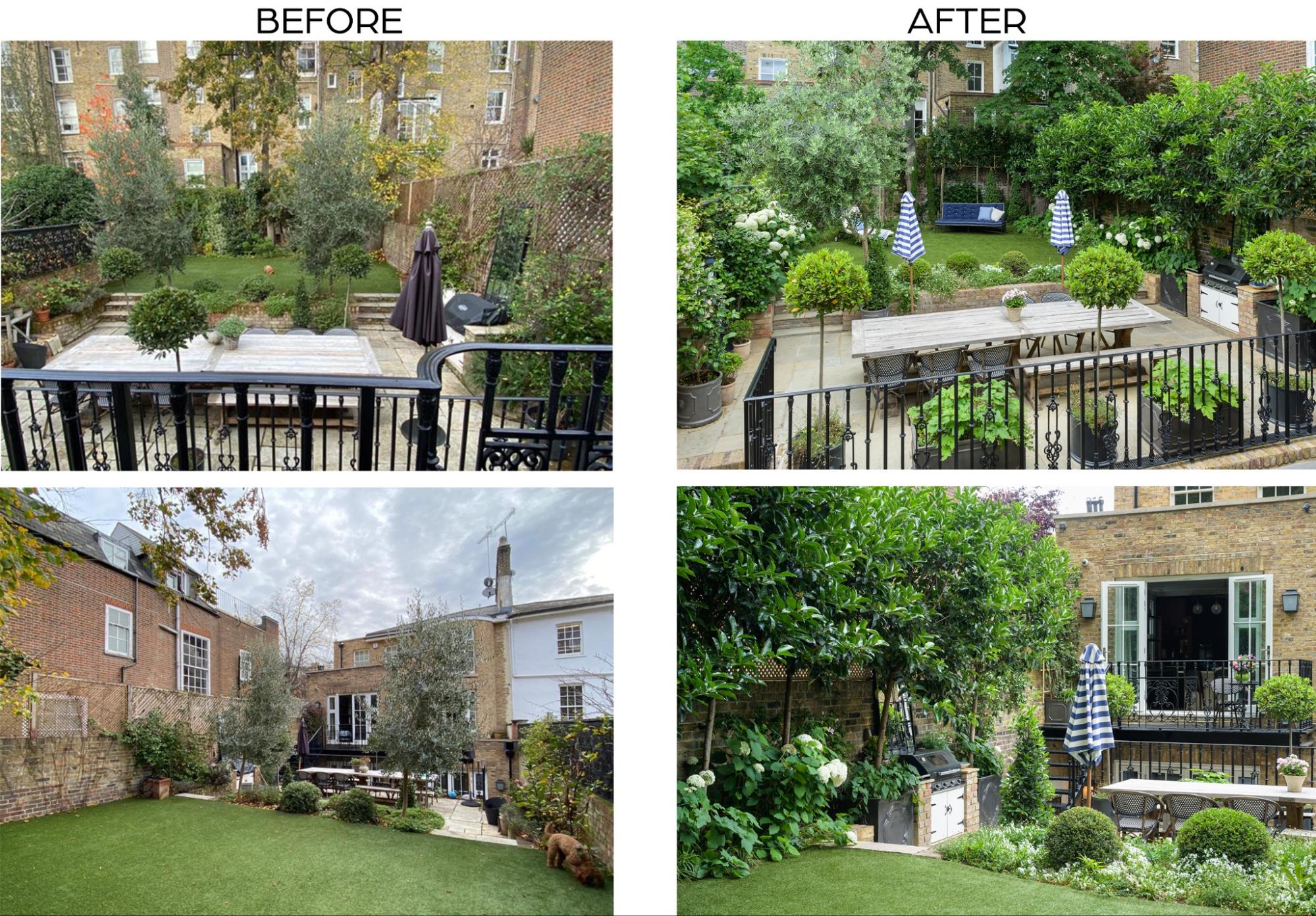
Designing With the Seasons
One of the most interesting qualities of planting is that it never remains entirely the same. Deciduous trees offer fresh foliage in spring, generous canopies in summer, changing colours in autumn and sculptural branches through winter. Evergreens provide more consistent structure and screening, although their appearance and density also vary between species. The right balance depends on how the garden is used. For clients who primarily enjoy their garden from indoors during the colder months, year-round visual interest may be more important than maintaining complete screening throughout winter. Beautiful branching structures, winter-flowering plants and seasonal changes can make the garden equally rewarding to look at when outdoor activity is limited.
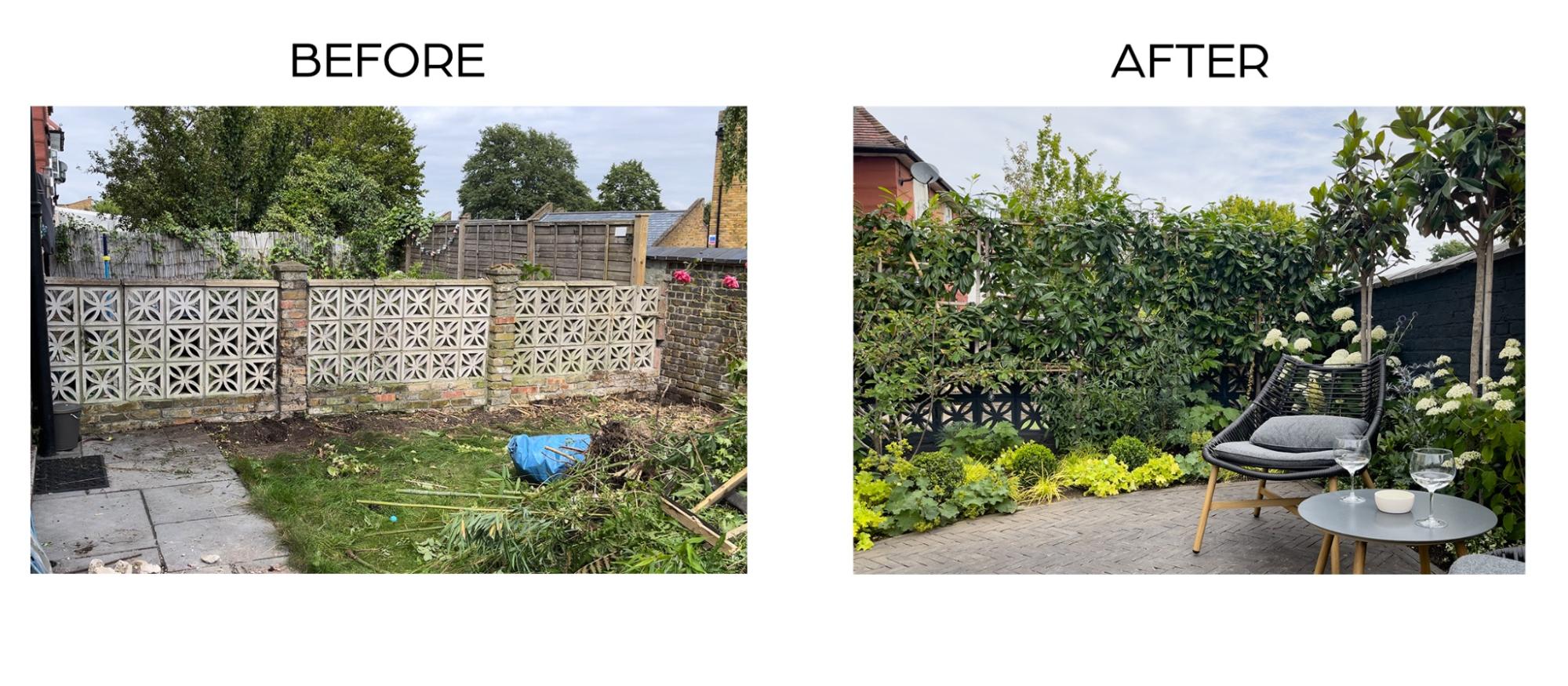
Where a garden is used for winter entertaining — perhaps beneath a sheltered pergola with integrated heating — privacy requirements may be different. More persistent screening around those areas could become a priority. The distinction is important: year-round beauty does not necessarily require year-round enclosure. Planting for Today and Tomorrow Trees and shrubs are investments in the future character of a garden. Their growth habits, mature dimensions and changing forms need to be considered from the beginning. Where immediate privacy is a priority and the budget allows, larger, established specimens can be a worthwhile investment. A strategically positioned mature tree may transform an overlooked seating area from the moment it is planted. However, this does not mean every plant needs to be purchased at an advanced size. A thoughtful planting scheme can balance a few significant specimens with younger, smaller or appropriately faster-growing plants, directing the budget towards the areas where it will make the greatest difference.
Good planting design considers not only how a garden looks when completed, but how it is likely to develop over the following years. Of course, plants are living organisms. Their growth is influenced by soil, light, moisture, competition and changing environmental conditions. Even with careful planning, nature does not always follow our predictions precisely. Appropriate species selection, realistic spacing and ongoing management allow the landscape to develop while maintaining the intended balance. More Than Privacy: Creating a Living Atmosphere Perhaps the greatest quality of planting is that it offers far more than visual screening. Leaves moving gently in the breeze, shifting patterns of sunlight and shadow, the contrast between fine and bold foliage, and the changing colours of the seasons all contribute to the experience of being in a garden. There is something particularly rewarding about creating a space where the presence of the surrounding city gradually gives way to the quieter rhythms of nature. Planting also has an increasingly important environmental role. As summer heatwaves become more frequent, trees and vegetation can help moderate garden microclimates through shade and evapotranspiration. Carefully positioned planting can make outdoor seating areas more comfortable during hot weather, while also providing habitat and resources for wildlife. In this way, the same living composition can address several needs simultaneously: privacy, comfort, visual character, seasonal interest and environmental resilience. The most successful planting schemes do not simply conceal what lies beyond the garden. They create something beautiful and meaningful within it — a landscape that continues to evolve, offering new experiences as it grows.
Chapter 04 — The Other Side of Privacy: Sound, Atmosphere and Comfort
Visual privacy is only one part of what makes a garden feel secluded. A space may be beautifully screened from neighbouring windows yet still feel exposed to traffic noise, prevailing winds or harsh lighting. Creating a genuine sense of retreat requires us to consider not only what we see, but also what we hear and how comfortable we feel within the space. In an urban environment, complete silence is rarely realistic. However, thoughtful landscape design can significantly influence how we experience the sounds and sensations around us. Can Planting Really Reduce Noise? The ability of vegetation to help reduce unwanted noise is often underestimated, although its effectiveness depends greatly on how it is used. Dense hedges, trees and layered planting can contribute to sound attenuation by absorbing and scattering some sound energy. The depth, height and density of vegetation, together with the characteristics of the ground beneath it, all influence the result. Research published by the Trees and Design Action Group and Forest Research highlights the potential of substantial vegetated buffers to reduce urban noise. Under suitable conditions, a densely planted buffer approximately three metres deep may achieve a reduction of around 5 dB(A). This is an important distinction when designing gardens of different sizes. A generous suburban garden may have sufficient space to accommodate a substantial planted boundary, combining trees, evergreen shrubs and lower vegetation. Such a composition can provide visual screening, contribute to noise reduction and create a rich landscape edge. In a compact courtyard, where every metre matters, a narrow hedge is unlikely to offer comparable acoustic performance. Here, a well-designed solid boundary, potentially incorporating a solid form of fencing or other
constructed elements, may provide a more effective starting point. Planting can then soften the structure and integrate it into the garden. Where noise is a significant concern, the position of the source, the height and continuity of barriers, and the relationship between neighbouring buildings all need to be considered. Acoustic performance cannot be judged by appearance alone. Changing What We Hear Reducing the physical level of noise is only one approach. Another is to influence which sounds attract our attention. The gentle movement of water, leaves rustling in the breeze or the activity of birds can introduce a more pleasant acoustic character, making distant traffic or neighbouring activity feel less dominant. A small water feature positioned near a seating area may provide a soft, continuous sound. In a larger garden, a stream, cascade or more substantial water feature might become part of the landscape composition. The objective is not necessarily to drown out the surrounding city, but to create a more balanced and enjoyable soundscape. The difference can be surprisingly noticeable. A garden does not need to become silent to feel peaceful. Finding Shelter in the Right Place Wind is another factor that can influence how comfortably we use outdoor spaces. Before introducing screens or additional structures, it is important to understand how air moves through the site. The orientation of the garden, surrounding buildings, boundary openings and existing vegetation can all affect where draughts develop. Sometimes the most effective response is to position a seating area where the existing layout already provides shelter. Elsewhere, strategically placed planting, a wall, pergola or partially enclosed structure may be appropriate. The solution should always respond to the particular conditions of the garden.
Shelter must also be considered alongside sunlight, views and the overall spatial arrangement. An enclosed seating area may offer protection from wind but become less enjoyable if it sacrifices the very qualities that made the location attractive. Successful design is about finding the right balance. The Garden After Dark Lighting has an extraordinary ability to transform the atmosphere of a garden, but more light does not necessarily create a better result. A garden is not a football pitch that needs to be illuminated from boundary to boundary. Good garden lighting is as much about what remains in shadow as what is illuminated. Carefully positioned light can reveal the sculptural form of a tree, draw attention to the texture of natural stone or gently illuminate a path through planting. Subtle contrasts between light and darkness introduce depth, allowing the garden to feel layered and intriguing rather than flat and exposed. Lighting also influences privacy. A brightly illuminated seating area against a dark surrounding landscape can make its occupants more visible from neighbouring properties. Equally, poorly positioned fittings can create glare, unwanted light spill and disturbance to wildlife. A considered lighting scheme balances practical visibility and safety with atmosphere, privacy and the natural character of the garden. Designing for the Senses The most memorable gardens often engage our senses in ways we do not immediately recognise. The fragrance of a flowering shrub beside a pathway. The warmth of natural stone beneath the afternoon sun. The movement of grasses catching the
light. The transition from an open, sunny terrace into the cooler shade beneath a tree. Some of these experiences are deliberately composed. Others emerge through the natural interaction of planting, materials, weather and seasonal change. The designer's role is to understand how these elements relate to one another, allowing them to create a coherent atmosphere rather than a collection of unrelated features. Ultimately, privacy and peace are not achieved by screening alone. They emerge from the relationship between space, sound, shelter, light and the living landscape — creating a garden that feels comfortable, engaging and distinctly removed from the pace of everyday life.
Chapter 05 — Creating a Sense of Retreat Without Closing the Garden In
A garden can be completely screened from its neighbours and still lack the feeling of being somewhere special. Privacy provides an important foundation, but a genuine sense of retreat comes from something more personal — the way a space connects with its surroundings and, ultimately, with the people who use it. The most successful gardens do not simply shut out the outside world. They establish a considered relationship with it, retaining what is beautiful, softening what is intrusive and creating an atmosphere that feels distinctly their own. Looking Beyond the Boundary Some of the most valuable features of a garden may lie beyond its boundaries.
A magnificent mature tree in a neighbouring property, the silhouette of distant treetops, an interesting architectural detail or a generous expanse of sky can all contribute to the character of an outdoor space. In landscape design, this is often described as borrowed landscape — incorporating views and features from the wider surroundings into the garden's own composition. Rather than treating every neighbouring element as something to conceal, a thoughtful design recognises which views are worth preserving and celebrating. A carefully framed tree canopy can give a relatively modest garden a connection to a much larger landscape. In a generous garden, views towards surrounding woodland or distant architectural features may help establish its relationship with the wider setting. These connections introduce visual depth and a sense of openness without necessarily compromising privacy. A Garden That Belongs to Its Setting A garden is never experienced entirely in isolation. Its relationship with the house, the architecture, the surrounding landscape and the views from within the property all influence how the space is perceived. A beautifully composed garden should offer something from the living-room window on a winter morning just as much as from a terrace on a summer evening. The position of a tree, the proportions of a planted border or the placement of a focal point can shape these everyday views, creating a visual connection between indoors and outdoors throughout the seasons. Equally, the character of the garden should feel appropriate to its setting. This does not mean simply repeating the architecture in the landscape, but establishing a meaningful relationship between the two.
When these elements work together, the garden begins to feel like a natural continuation of the home rather than a separate space beyond its walls. The Personal Meaning of Escape Perhaps the most important aspect of creating a green retreat is recognising that tranquillity means different things to different people. For one person, it may be the quiet pleasure of sitting beneath a tree with a book, surrounded by soft planting and birdsong. For another, it could be a contemporary outdoor lounge, sheltered from neighbouring views, where evenings are spent entertaining friends. Someone else might find their greatest sense of escape in gardening itself — tending plants, observing seasonal changes and feeling connected to the natural world. None of these experiences is inherently more peaceful or luxurious than another. The role of the designer is to understand what makes the garden's owners feel comfortable, relaxed and genuinely at home, then translate those aspirations into a coherent landscape. This is where design moves beyond arranging physical elements. It becomes about creating an environment that supports the way people want to live and the way they want to feel. A Place to Leave the City Behind The real achievement of a private garden is not making the surrounding city disappear entirely. It is creating a place where its presence no longer dominates the experience. A glimpse of neighbouring trees, the changing light across a terrace, the gentle movement of foliage or a familiar view from the house can all contribute to that feeling. Sometimes the sense of escape is immediate. At other times, it reveals itself gradually, through the changing seasons and the small rituals of everyday life.
What matters is that the garden feels connected to its owners, its architecture and its surroundings, while offering something that the busy world beyond its boundaries cannot. A place to retreat, reconnect and simply enjoy being there.

Envision
Design
Enjoy
Start your green journey with a click